Evo X Codes C161E and C161C: What They Mean and How to Fix Them
By ACD/AYC PUMPS · UPDATED SEP 27, 2026
C161E is a pressure problem, C161C is electrical. What each code means, what causes it and how to diagnose it.

C161E and C161C are the two ACD/AYC codes I'm asked about most on the Evo X and the Lancer Ralliart. Both are logged by the all-wheel-control computer (AWC-ECU) and both usually come with a “Service Required” warning — but they point to completely different problems. One is about pressure, the other is electrical. Mixing them up is how people end up replacing the wrong part.
C161E — the pump was told to run but the system didn't reach the target pressure in time. C161C — the electrical current through the ACD proportioning valve is out of range. Pressure problem versus wiring or valve problem.
What does code C161E mean?
In the factory service manual C161E sits under the electric pump system (“S-AWC pump relay circuit system”). Here's how the system works: the ECU switches the pump on through the pump relay, and the pressure sensor tells it when the circuit is up to pressure. C161E is set when the ECU has told the pump to run, but the pressure sensor hasn't reached the specified pressure within the specified time.
So the code doesn't say “the pump is dead”. It says “I asked for pressure and didn't get it”. Mitsubishi lists these possible causes:
- Low fluid level
- Faulty AWC pressure sensor
- Faulty electric pump relay
- Faulty hydraulic unit
- Faulty electric pump
- Damaged wiring or connectors
- Faulty AWC-ECU
- Operation at low temperature
In practice, on a car with a lot of miles, the hydraulic unit itself is by far the most common reason: internal wear and corrosion mean the pump runs but can't build pressure fast enough.
How to diagnose C161E
Work from cheap to expensive — that's also the order Mitsubishi's own procedure follows:
- Was it cold? At low temperature the fluid thickens and the pump struggles. Clear the code and see whether it comes back once the car is warm.
- Check for other codes. Pressure sensor codes (C1611, C1612, C1625) or a relay code (C161D) change the diagnosis — fix those first.
- Check the fluid level in the reservoir, and look for leaks.
- Listen to the pump. Switch the ignition on (the factory tool has an actuator test for this). No sound at all points to the relay, fuse, wiring or the pump motor. A pump that runs and runs points to the hydraulic side.
- Check the relay, connectors and ground for the pump.
- Only then the hydraulic unit — and only after that the ECU, which is rarely the cause.
What does code C161C mean?
C161C is the ACD proportioning valve system (malfunction). The proportioning valve is the solenoid-operated valve the ECU uses to set the pressure going to the ACD clutch pack — in other words, how hard the centre differential locks. The ECU monitors the current through that solenoid, and C161C is set when the monitored current is abnormal.
That makes it an electrical fault, not a pressure fault. Mitsubishi lists three causes:
- Faulty ACD proportioning valve
- Damaged wiring or connectors
- Faulty AWC-ECU
How to diagnose C161C
- Check the connectors between the ECU and the valve for corrosion, bent pins and damaged wires. Water and road salt get into these.
- Measure the solenoid resistance. The factory specification for the ACD proportioning valve is 3.7 ± 0.3 Ω. An open circuit or a reading well outside that range means a faulty valve.
- Check the harness continuity between the ECU and the valve.
- Clear the code and re-test. If it doesn't come back, the fault was most likely in a connector.
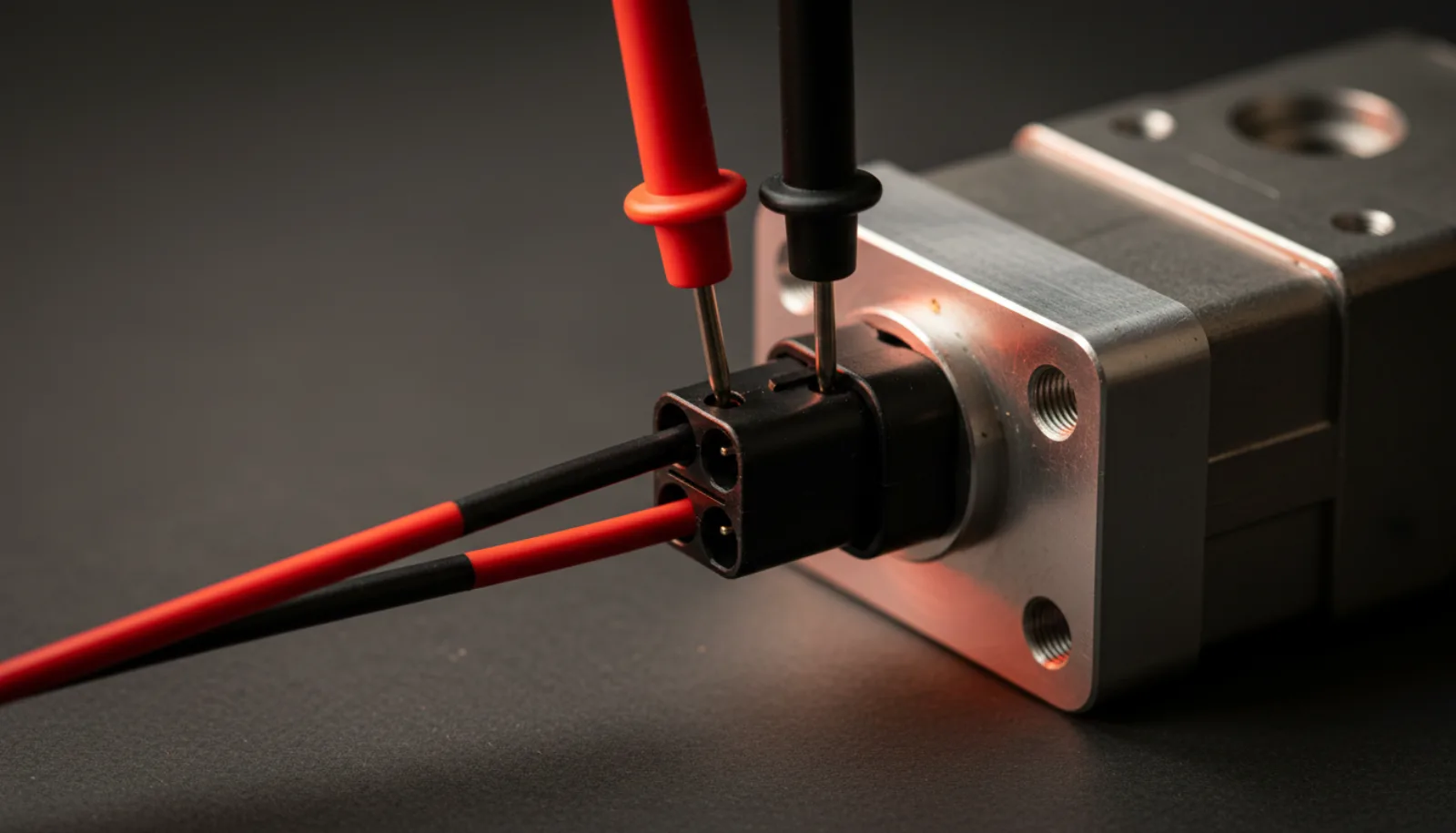
One important point: rebuilding the pump won't fix C161C if the fault is in the wiring. Don't let anyone sell you a pump for this code until the connectors and the valve have been checked.
Can you drive with C161E or C161C?
Yes, the car drives — the system switches the ACD (and AYC) off, so you lose the active differentials, not the car. But I wouldn't leave C161E for months. A pump that can't reach pressure runs longer and harder every time, and that heat and load is what burns out the motor. The earlier you deal with it, the more of the original unit can be saved.
Can you just clear the codes?
You can, and it's a useful test after a repair or after a cold start. But if the fault is real, the code will come back — often on the very next drive.
When it's the hydraulic unit
If the checks above point to the pump itself, it can almost always be rebuilt rather than replaced. We restore ACD/AYC pumps: worn internals and seals are renewed and every unit is calibrated and load-tested on the bench. On the Evo X the motor is a known weak point, which is why our Stage 2 rebuild fits a more reliable motor. The whole process is in ACD pump restoration process, and a failed core can go towards a restored unit through our trade-in programme.
After any pump work the circuit has to be bled — here's how to bleed the ACD/AYC system without MUT-III. And if you're seeing the dash warning but haven't read the codes yet, start with Service Required 4WD on the Evo X and Lancer Ralliart.
Parts for this job
Pick your car — each link goes straight to the part:
Got a code that isn't covered here? Message me with what your scan tool shows.

